
What makes a hit song | Elvis Presley’s road to success | Blurred Lines Controversy | Walk on water |
Well I asked Google Gemini what music is and this is the answer I received.
Music is the universal art of organizing sound and silence in time to communicate emotions and ideas. It generally combines elements like melody, harmony, rhythm, and timbre, and can be created using instruments, the human voice, or even digital synthesizers.
The fundamental building blocks that make up what we hear include:
- Pitch & Melody: Pitch is the highness or lowness of a sound. A sequence of these notes that creates a recognizable, satisfying tune is the melody.
- Harmony: The sounding of multiple pitches simultaneously to create chords that support and enrich the melody.
- Rhythm: The steady pulse, beat, and repeating patterns of time that dictate how the music moves and makes us want to tap our feet.
- Timbre: The unique tone quality or color of a sound (e.g., the difference between a raspy saxophone and a smooth flute).
For a quick and engaging breakdown of the basics of music theory, pitch, and rhythm:
Why Does Music Exist?
Music has been an integral part of every known human culture throughout history. It serves many different purposes, such as:
- Emotional Expression: It allows creators to convey feelings that are hard to put into words and helps listeners process their own emotions.
- Ritual & Community: It brings people together during ceremonies, celebrations, and cultural traditions.
- Entertainment & Healing: Used for dancing, storytelling, background atmosphere, and therapeutic or psychological healing.
Ultimately, the definition of music is vast and continually evolving. While it is often defined as intentionally structured or purposeful sound, experimental music (like 4’33” by John Cage) explores the idea that even the accidental, ambient sounds of our environment can be experienced musically.
Music Personally:
Music to me is a large and varying sphere of influence. I have a very diverse sense of music likes depending on my mood. I have a very diverse collection of music that truly affects me. We will start with Kitaro. His music transcends time and space. Just lay back and listen to the music, some of it you will feel in your bones. I saw him in concert at the Hard Rock in Orlando years ago. He had a Tibetan long horn that was like 30 feet long and a gong that was at least 10 feet tall. You could feel his passion in his music and it literally moved you in your seats.
Kitaro:
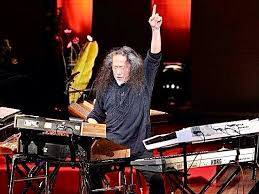
Kitarō (born Masanori Takahashi) is a world-renowned Japanese musician, composer, and producer widely regarded as a founding architect of new-age music. Combining electronic synthesizers with traditional Japanese instruments, his atmospheric, contemplative arrangements have made him a global icon. He won a Grammy Award for his album Thinking of You and received a Golden Globe for scoring Oliver Stone’s film Heaven & Earth. [1, 2, 3, 4]
Core Musical Style
- Instrumentation: Fuses deep synthesizer beds with acoustic folk and classical elements.
- Tradition: Integrates traditional Japanese textures, including the striking presence of Taiko drums.
- Themes: Explores peace, nature, spiritual journeys, and cosmic connection. [1, 2, 3, 4, 5]
Career Milestones
- Early Years: Began in the 1970s with the psychedelic rock group Far East Family Band before finding his solo electronic sound.
- Breakthrough: Achieved international fame by composing the soundtrack for the landmark Japanese TV documentary series Silk Road.
- Accolades: Captured a record 16 Grammy nominations in the Best New Age Album category throughout his career. [1, 2, 3]
Essential Discography & Tracks
- Silk Road: The iconic soundtrack that introduced his music to global audiences.
- Kojiki: A highly acclaimed symphonic album chronicling Japanese mythology.
- Thinking of You: His award-winning masterpiece focused on tranquil, melodic textures.
- Signature Tracks: “Matsuri”, “Caravansary”, “Oasis”, and “Koi” remain cornerstones of his live tours. [1, 2, 3, 4, 5]
Isao Tomita:
Isao Tomita was a godsend for me. He took regular works of musical art and reimagined them electronically. He introduced us into the synthesizer age. I could put on his music lay back and let my mind wander and find myself in incredible places where only dreams are made. I bought his album “Tomita’s greatest hits” first and was hooked. Then I was at a music store in Orlando, Fl called Fashion Square Mall where they were demoing the new Klipschorn speakers and the were using his “Live at the Linz” album and I was blown away. [These speakers back then were like $12,000.00 a pair and over $16,000.00 a pair now.] In certain parts of the songs you could actually hear the helicopters rotors wash. The recorded sounds from the concert were just simply amazing.
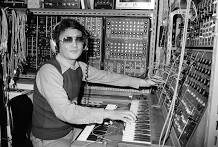
Isao Tomita (April 22, 1932 – May 5, 2016) was a legendary Japanese composer and a world-renowned pioneer of electronic and space music. Often known simply as Tomita, he revolutionized the music world in the 1970s by using analog synthesizers to transform classical orchestral pieces into futuristic soundscapes. Rather than using computers for sterile playback, Tomita treated his massive Moog III modular synthesizer like an orchestra, painstakingly building rich textures, atmospheric “spatial audio,” and organic tones entirely by hand. [1, 2, 3, 4]
Key Career Milestones
- Classical Reimagined: He gained international fame by interpreting modern classical composers like Claude Debussy, Igor Stravinsky, and Gustav Holst through electronics. [1, 2, 3, 4]
- Grammy Success: His breakthrough album Snowflakes Are Dancing (1974) earned four Grammy nominations, making him the first Japanese artist nominated for a Grammy. [1, 2]
- Massive Live Concerts: During the 1980s, Tomita organized gargantuan outdoor “Sound Cloud” concerts with speakers suspended from helicopters, including a 1984 show in Linz for 80,000 people and a 1986 Statue of Liberty celebration in New York. [1, 2, 3]
- Lasting Influence: He pioneered “desktop music,” heavily influenced science fiction film scores (including elements of Apocalypse Now), and spent his final years collaborating with modern technologies like the Vocaloid Hatsune Miku. [1, 2]
Essential Discography
- Snowflakes Are Dancing (1974) – A hypnotic electronic interpretation of Claude Debussy’s classical works.
- Pictures at an Exhibition (1975) – A vivid synthesizer recreation of Modest Mussorgsky’s famous suite.
- The Planets (1976) – A sci-fi electronic Odyssey based on Gustav Holst’s orchestral suite.
- Kosmos (1978) – Space-themed arrangements incorporating works by Strauss, Ives, and movie themes.
- The Bermuda Triangle (1979) – A concept album focused on close encounters and underwater mysteries. [1, 2, 3, 4, 5]
Isao Tomita’s “Live at Linz 1984” (subtitled The Mind of the Universe) was a massive, landmark outdoor electronic music concert performed on September 8, 1984, along the banks of the Danube River in Linz, Austria. Serving as the opening event for that year’s Ars Electronica festival, this ambitious performance drew an audience of roughly 80,000 spectators. [1]
The Concert Concept & Setup
Tomita attempted to describe the 15-billion-year history of the cosmos through his electronic interpretations of classical masterpieces. The performance is widely remembered for its staggering, avant-garde audio engineering and visual effects: [1]
- The Control Center: Tomita mixed and controlled the sound live from a specially constructed pyramid studio suspended by a crane over the river. [1, 2]
- 13-Channel Soundscape: The sound system utilized speakers on both sides of the Danube, a sound channel broadcasting from a helicopter flying 1,500 feet overhead, and a mobile sound system aboard a passing ship. [1, 2]
- Live Musicians: The ship carried a violinist, a traditional Japanese shakuhachi player, and the Linz State Theater Chorus consisting of 100 Austrian singers. [1, 2]
- Visual Elements: The acoustic elements were paired with massive laser arrays, elaborate lighting designs, and synchronized fireworks displays. [1]
Notable Track List
The performance featured Tomita’s synthesizer interpretations of classical works, blended with live orchestral elements. Key tracks from the RCA Red Seal release included pieces by Strauss, Holst, Stravinsky, Ravel, and Wagner, along with film music from John Williams. [1, 2, 3, 4, 5]
Below is actual footage and poor quality sound from the actual event that changed musical history. 80,000 fans on both sides of the Danube river.
Enya:
Enya is a one of a kind artist that caught me off guard. I heard her song at the Grammys and I was hooked. The music just made me want to dance. I could not explain it, I saw fairies dancing and flying about in a bright blue, slightly cloudy sky. Which is strange especially for me since I am way to awkward to dance in leotards. Plus my knowledge of Ballet is how do you say, nil. However she did introduce me to Celtic music.
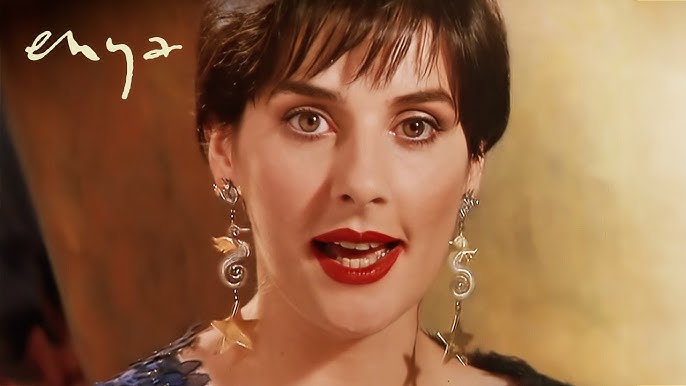
Enya (born Eithne Pádraigín Ní Bhraonáin) is an iconic Irish singer, songwriter, and composer famed for her ethereal, multi-layered vocal tracks and atmospheric soundscapes. With more than 80 million albums sold worldwide, she is Ireland’s best-selling solo artist and trailing only U2 as the nation’s top musical export. [1]
🎶 Her Signature Sound
- Vocal Layering: Overdubbing her own voice up to 100 times for a “choir of one” effect.
- Wall of Sound: Blending dense synthesizer backdrops, piano melodies, and heavy reverb.
- The Triumvirate: Crafting all music alongside producer Nicky Ryan and lyricist Roma Ryan.
- Multilingualism: Singing in English, Irish Gaelic, Latin, and even Quenya (an Elvish tongue). [1, 2, 3, 4, 5, 6]
💿 Definitive Albums & Career Highlights
- The Roots: Started her career in 1980 with her family’s traditional Celtic folk band, Clannad.
- Watermark (1988): Her commercial breakthrough album featuring the massive international hit “Orinoco Flow”.
- A Day Without Rain (2000): Her highest-selling album, propelled by the comforting anthem “Only Time”.
- Cinematic Legacy: Earned Oscar and Golden Globe nominations for “May It Be” from The Lord of the Rings. [1, 2, 3, 4, 5, 6]
🏰 Personal Life & Reclusiveness
- Manderley Castle: Lives a deeply private life in her castle in Killiney, County Dublin.
- No Touring: She famously creates music exclusively in the studio and has never performed a solo concert tour. [1, 2, 3, 4]
Celtic Music:
Celtic music was a transition of mine that involved the love of the sounds of bag pipes and heavy percussion. The melodic sounds of bag pipes mixed with heart and chest pounding drums took me to a new place. If you sit back and relax and close your eyes you start to envision sacred forests, the dew dripping off the leaves in the early morning fog, partially cloudy with the sun just starting to crest and peek through the trees. I did not see these women in my visions however, I will always now.
Final Exit:
I do know one thing for sure. While I was unable to serve in the military, that is the music I choose to dance to heaven with. “Amazing Grace” on bagpipes is the pinnacle of sound to float towards heaven with, ever since the movie “Highlander” came out.

What are your thoughts:
Leave a Reply